Showing posts with label Acquisition. Show all posts

Thursday, July 07, 2016

Avast acquires rival AVG for $1.3 billion


Avast has announced plans to acquire AVG in a $1.3 billion deal that will combine the antivirus products of both companies.

On Thursday, the Prague, Czech Republic-based company said an agreement has been reached that will see AVG bought out in an all-cash deal, made possible through cash on hand and debt financing.
Avast will offer $25 per share to AVG investors, a premium of over 30 percent on current trading prices.

In a press release, Avast said the deal would give the antivirus provider a combined network of over 400 million endpoints, 160 million of which are mobile. These will "act as de facto sensors, providing information about malware to help detect and neutralize new threats as soon as they appear," according to the firm.

Using this data, Avast will then be able to boost its security and privacy products, and emerging markets such as security for internet of things devices are of particular interest.

"We believe that joining forces with Avast, a private company with significant resources, fully supports our growth objectives and represents the best interests of our stockholders," said Gary Kovacs, CEO of AVG, in a statement. "Our new scale will allow us to accelerate investments in growing markets and continue to focus on providing comprehensive and simple-to-use solutions for consumers and businesses, alike."

The buyout has been approved by the Avast management and supervisory boards, and AVG's boards has recommended that AVG shareholders accept the deal.

The transaction is expected to close between September 15 and October 15 this year, depending on the results of regulatory reviews.


Source: Zdnet
Via: Cnet
Share:

Wednesday, June 15, 2016

Microsoft Acquires LinkedIn for a cool $26.2 billion


In an announcement on monday morning, Microsoft revealed that it had acquired LinkedIn for “$196 per share in an all-cash transaction valued at $26.2 billion, inclusive of LinkedIn’s net cash.” The Mountain View-based company is said to be retaining its brand, culture, and independence, and Jeff Weiner will maintain his position as CEO.

In a statement, Satya Nadella, CEO of Microsoft, noted, “The LinkedIn team has grown a fantastic business centered on connecting the world’s professionals. Together we can accelerate the growth of LinkedIn, as well as Microsoft Office 365 and Dynamics as we seek to empower every person and organization on the planet.”

As per Microsoft’s announcement, the acquisition was “fully supported” by both Reid Hoffman (LinkedIn’s co-founder and chairman of the board) and Weiner both fully support this transaction. The social network’s continuous growth has led to more than 433 million members worldwide, with over 105 million unique visiting members each month. And as a key recruiting tool, there are now more than 7 million active job listings on the site. In a letter to employees, Nadella said LinkedIn would play a role in the development of Office. “This deal is the next step forward for Office 365 and Dynamics as they connect to the world’s largest and most valuable professional network,” he said.
“Just as we have changed the way the world connects to opportunity, this relationship with Microsoft, and the combination of their cloud and LinkedIn’s network, now gives us a chance to also change the way the world works,” Weiner added to Nadella’s statement. “For the last 13 years, we’ve been uniquely positioned to connect professionals to make them more productive and successful, and I’m looking forward to leading our team through the next chapter of our story.”

The $26.2 billion deal is expected to fully close by the end of 2016.
“Today is a re-founding moment for LinkedIn. I see incredible opportunity for our members and customers and look forward to supporting this new and combined business,” said Hoffman. “I fully support this transaction and the Board’s decision to pursue it, and will vote my shares in accordance with their recommendation on it.”

In his internal memo, Nadella said that there will be no immediate changes to LinkedIn’s organization.

“We know that near term there will be no changes in who reports to whom so no reporting relationships at Microsoft will change in that regard,” Nadella said. “This approach is designed to keep the LinkedIn team focused on driving results while simultaneously partnering on product integration plans with the Office 365 and Dynamics teams.”


Source: Digital Trends

Share:

Wednesday, May 04, 2016

Microsoft acquires Solair,an Italian IoT platform

 http://core0.staticworld.net/images/article/2015/08/microsoft-campus-100608982-orig.jpg


Microsoft today announced that it has acquired Solair, an Italy-based IoT service that was founded in 2011 (and not the U.S.-based company that makes retractable awnings).

Solair already used Microsoft’s Azure cloud computing platform to offer its services, so it’s no surprise that Microsoft plans to integrate its technology into the Azure IoT Suite. For now, though, it’s unclear what exactly Microsoft’s plans for Solair are beyond the company saying that it is “excited about their technology and talent – and delighted to welcome them to the Microsoft team.”
The financial details of the transaction were not disclosed.

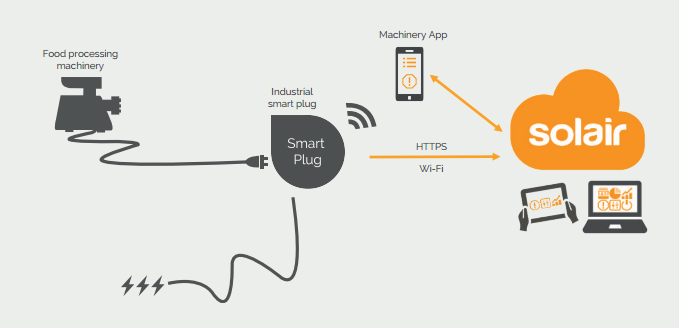
While Solair is not exactly a household name, the company has already worked with a wide variety of clients, including Italian espresso machine manufacturer Rancilio Group and food processing machine company Minerva Omega Group.

2016-05-03_0854

“Solair shares our ambition for helping customers harness their untapped data and create new intelligence with IoT, and this acquisition supports our strategy to deliver the most complete IoT offering for enterprises,” said Sam George, Microsoft’s Partner Director for Azure IoT, in today’s announcement.

Solair offers a full suite of IoT products, including a gateway for collecting data and an enterprise platform for custom deployments and integration with existing services.

 2016-05-03_0859


 Source: TechCrunch


Share:

Tuesday, May 03, 2016

Adobe acquires Livefyre


Adobe today announced that it plans to acquire Livefyre, the service that’s probably best known for its online commenting system. On top of this service, the company also offers a number of tools for brands to engage with their audiences as well, which is likely what Adobe was most interested in.
Adobe plans to integrate Livefyre into its Experience Manager, its content management service for building web sites and basic mobile apps. ” Livefyre will be part of Adobe Experience Manager and integrated across Adobe Marketing Cloud to make user-generated content available across all eight digital marketing solutions,” the company writes in today’s announcement.

Livefyre says its customers include the likes of CNN, The Coca-Cola Company and Major League Baseball. Given the company’s reach, chances are quite a few of its customers are also currently Adobe customers as well (through its Experience Manger, but also its Marketing Cloud).

Livefyre was founded in 2009. At the time, it was mostly a straightforward commenting platform. Over time, the company then added marketing tools on top of this, but at its core, the service is still about user-generated content (and most of that content is still generated in the comments sections of the blogs that use it).

To go beyond comments, Livefyre also acquired the likes of Storify and launched its Livefyre Studio product to curate user-generated content and republish it.

The company raised a total of $67.3 million since its launch. Adobe participated in its last $47 million round (as did Salesforce), so the two companies were already quite familiar with each other.

“As the leader in digital experiences, Adobe helps brands create amazing content with Creative Cloud and then deliver and optimize those experiences using Adobe Marketing Cloud,” said Aseem Chandra, the vice president for Adobe Experience Manager and Adobe Target, in today’s announcement. “With this acquisition our customers will be able to unify the best social media content with branded experiences created in Adobe Creative Cloud and community-driven content in Adobe Behance and Adobe Stock.”

Livefyre says its services will continue to work as usual for the time being.
Terms of the acquisition were not disclosed, but Adobe says it expects the deal to close within the next few months.


Source: Techcrunch
Share:

Synergyse,an interactive training service for Google Apps has been acquired by Google


Google has acquired Synergyse, a Toronto-based interactive training service for Google Apps for Work that was launched by a group of former Google employees in 2013. As part of this acquisition, Google will make Synergyse Training for Google Apps available for free to all Google Apps customers.

The company did not disclose the financial terms of the transaction. According to CrunchBase, Synergyse did not raise any outside funding.
While figuring out how to use Google Apps for Work may seem trivial, there is actually quite a bit of demand for this kind of training. Synergyse says its service has trained over 4 million people in 3,000 organizations so far. That probably makes it the most popular training service for Google Apps.

Google also notes that companies that use this training program see “on average 35 percent higher adoption across Apps products.”

Here is Synergyse’s description of the company’s incredible journey: “By joining the Google Apps team, we can accelerate our mission because we will be working even closer with the teams that build Google Apps. Advancing our mission at a faster speed is very exciting for the Synergyse team and our customers will directly see the benefits as we move forward.”

It surely didn’t hurt Synergyse that its service was built on top of Google’s Cloud Platform either, which should make integrating it with Google’s own services relatively easy.

Google says it will integrate Synergyse into its own products later this year. Existing customers will be able to continue using the service and new customers can now download the Chrome extension for free.


Source: TechCrunch
Share:

Friday, April 29, 2016

Comcast Acquires DreamWorks Animation for $3.8 billion


The rumors are true: Comcast subsidiary NBCUniversal announced it has snapped up DreamWorks Animation in a $3.8 billion deal. It'll give Comcast access to successful animation properties like Shrek, Kung-Fu Panda and How to Train Your Dragon, which should complement the NBCUniversal franchises Despicable Me and Minions. And, in a strange twist, the acquisition will also reunite DreamWork's Animation with its live action sibling, which was rebranded as Amblin Partners last year and already has a distribution deal with Universal.

The deal is expected to close by the end of the year, and Comcast says it doesn't foresee any regulatory opposition. Once everything is settled, DreamWorks CEO Jeffrey Katzenberg will step down and serve as chairman of DreamWorks New Media, and he'll also be a consultant for NBCUniversal.


Source: NBCUniversal
Via : Engadget 
Share:

Sunday, February 14, 2016

YouTube acquires BandPage, a music start up

https://pmcvariety.files.wordpress.com/2014/07/youtube-logo-full_color.jpg?w=670&h=377&crop=1


YouTube has acquired the online music platform BandPage. Terms of the deal were not disclosed, nor was there any mention of whether BandPage would be shuttered in the process.

BandPage is a marketing platform for musicians to connect with their fans and also promote their music on Facebook. Beyond the popular social network, BandPage also has a product called BandPage Everywhere that enables musicians to build a website and update their other promotional sites in just a few clicks. It’s likely that the value of the startup closely matched the synergies of YouTube — an artist can post their music video on the Google-owned social network and then have it instantly distributed to other online sites.

Over time, BandPage has moved beyond Facebook to partner with other services like Spotify, Ning, SoundCloud, StubHub, Rdio, iHeartRadio, and Twitter.

This isn’t a random acquisition as both companies share a common bond. Mike Cassidy, Google’s vice president and project leader of Project Loon, is an advisor to BandPage.

In a blog post, BandPage announced that it “is dedicated to helping musicians build their careers by growing their fan bases and increasing their revenue on the largest digital music services in the world. By joining forces with the team at YouTube, we can help artists reach their fans in more powerful ways than ever before.”

“YouTube already offers a global distribution platform for any artist to be discovered and some of the best self-publishing tools for musicians and other creators. The team has a lot of things planned to help musicians succeed on the platform, and more broadly across the BandPage network,” the post continued. “Our collective goal remains the same: to grow an open network of digital music services, develop intelligent new tools for managing/distributing artist content and commerce, and create new revenue opportunities for all musicians, on YouTube and beyond.”

BandPage claims to have more than 500,000 musicians on its platform, including Alicia Keys, Beyonce, Bruce Springsteen, Carrie Underwood, John Legend, Justin Timberlake, Maroon5, P!nk, Usher, Snoop Dogg, Rihanna, and Paul McCartney.

Since being founded in 2009, the startup has raised $27.6 million in funding. Investors include GGV Capital, IDG Ventures USA, Mohr Davidow Ventures, Northgate Capital, Walden Venture Capital, and several individuals. It competes with the likes of AAMPP, Sound Rink, Listener Approved, BandCamp, and others.


Source: Venture Beat
Share:

Thursday, February 11, 2016

Time Inc. Acquires Viant, Myspace Parent Company

http://mms.businesswire.com/media/20140428006394/en/413242/5/highres_timeinc.jpg


MySpace still exists. Crazy, right? The once monolithic social network had been fading into irrelevancy until it was relaunched with a little help from Justin Timberlake back in 2013. The fresh coat of paint wasn't enough to reinvigorate the platform, however, and it's now being sold as part of its parent company Viant to Time Inc. Yep, that's the same Time Inc that publishes Time, Fortune, Entertainment Weekly and a whole bunch of other magazines. The company described the acquisition as "game changing," most likely in reference to Viant's broader ad-tech business. MySpace does, supposedly, still have a part to play in that offering, but it's notable the site was barely mentioned in the footnote of today's press release.


Source: Engadget

Share:

Wednesday, February 03, 2016

Microsoft Acquires SwiftKey For $250M In Cash


Microsoft today confirmed that it has acquired SwiftKey — a startup based out of London that makes keyboard apps for Android and iOS devices and is already installed and used on some 300 million devices. The terms of the deal are not being disclosed but sources close to the deal tell us it’s $250 million in cash after Microsoft beat out other interested buyers, which we’ve heard also included Apple.

The deal will see Microsoft make further inroads into mobile productivity services — an area where it’s already made other acquisitions to gain ground, such as Wunderlist and Acompli.

But from what we understand, SwiftKey may also become part of another Microsoft ambition. Microsoft wants grow use of its Cortana digital assistant on Android, and by integrating Cortana into SwiftKey, some believe that it could be the gateway ramping up Cortana use without having to install a standalone app. (Cortana, incidentally, is being integrated elsewhere, too.)

The news of the upcoming sale was first broken by the FT last night.

The exit also raises some questions about the whether clever technology is enough for a startup to be a viable, standalone business: SwiftKey had started as a paid app but eventually moved into a freemium model to attract more users. It’s not clear what kinds of returns the startup was getting on that model. More to the point: joining a much larger platform like Microsoft will give the company the space to develop tech that may fit into a bigger business plan that relies less on Swiftkey as a standalone service.

In the event, SwiftKey will continuing doing what it does, with the whole team joining Microsoft and becoming a part of the company’s ambitions to own the mobile productivity space — an area underscored by its previous acquisitions of Wunderlist and Acompli. Specifically, in the coming months, it will get integrated with Microsoft’s Word Flow technology for Windows.


“In this cloud-first, mobile-first world, SwiftKey’s technology aligns with our vision for more personal computing experiences that anticipate our needs versus responding to our commands, and directly supports our ambition to reinvent productivity by leveraging the intelligent cloud,” Harry Shum, EVP of technology and research, said in a blog post. He says that SwiftKey estimates that its users have saved nearly 10 trillion keystrokes, across 100 languages, saving more than 100,000 years in combined typing time.

Shum adds that Microsoft will continue to offer its apps across different platforms, and it’s a safe bet that we’ll see it integrated into Windows products, too.

“We’ll continue to develop SwiftKey’s market-leading keyboard apps for Android and iOS as well as explore scenarios for the integration of the core technology across the breadth of our product and services portfolio,” he writes. “Moreover, SwiftKey’s predictive technology aligns with Microsoft’s investments and ambition to develop intelligent systems that can work more on the user’s behalf and under their control.”

SwiftKey cofounders Jon Reynolds and Ben Medlock also have some words to say on the news.

SwiftKey had raised just under $22 million from investors that include Index, Accel and Octopus. From what we understand, some of those investors realised there was a window of opportunity with Microsoft when the Windows software giant started acquiring other companies focused on mobile productivity and intelligent processing that leveraged cloud architecture.

SwiftKey then proceeded to head-hunted James Bromley, then MD of MailOnline, to come on board as COO to shepherd the process of dealing with Microsoft and other potential buyers.


Source: Techcrunch
Share:

Friday, January 29, 2016

Apple Acquires LearnSprout : An Education-Tech Startup


Apple Inc. said it acquired education-technology startup LearnSprout, which creates software for schools and teachers to track students’ performance.

Apple is working on education tools for the iPad, which will allow students to see interactive lessons, track their progress, and share tablet computers with peers. "Apple buys smaller technology companies from time to time, and we generally do not discuss our purpose or plans," said Colin Johnson, a spokesman for Apple.

LearnSprout Chief Executive Officer Franklyn Chien didn’t immediately respond to a request for comment. More than 2,500 school districts in 42 U.S. states use LearnSprout’s software, according to the company’s website.

The San Francisco startup has raised more than $4 million from investors, including Andreessen Horowitz and Formation 8. Bloomberg LP, the owner of Bloomberg News, is an investor in Andreessen Horowitz. LearnSprout competes with Clever, which has raised more than $40 million from Sequoia Capital, Lightspeed Venture Partners, and other investors.


Source: Bloomberg
Share:

Tuesday, January 19, 2016

“Minecraft Education Edition” Coming Soon For Classrooms, Following Acquisition Of Learning Game by Microsoft


Microsoft is further expanding on its investment in Minecraft, bought in 2014 for $2.5 billion, by acquiring a learning game called MinecraftEdu for an undisclosed sum. The game, produced by a company called Teacher Gaming LLC, allows teachers to use Minecraft in the classroom, and includes a library of lessons and activities used to teach subjects including STEM, history, language, and art. Microsoft says it will use this acquisition to build out its own “Minecraft Education Edition,” which will launch into free trials as of this summer.


Minecraft is already known for being a tool that encourages kids to learn more about game design and programming, among other things, but MinecraftEdu was specifically designed with the goals of educators in mind. Teachers could adapt the product to their own curriculum needs, while also eliminating the need to set up or manage their own hardware, thanks to the tool’s hosted environment.
Plus, the learning game offered a range of activities created by other teachers, as well as hands-on workshops and courses, and technical support.

Already, notes Microsoft when detailing the acquisition, over 7,000 classrooms in more than 40 countries worldwide use Minecraft as part of their curriculum today. The launch of its own supported Education Edition could easily increase those numbers.

The company says that by having students create virtual worlds in Minecraft, they can learn a range of skills, like digital citizenship, empathy, social skills, and can even improve their literacy, while also getting real-time feedback from their teacher. Some examples of Minecraft in the classroom today include elementary school students learning about city planning and engineering; middle schoolers learning the building blocks of computer science in a Minecraft coding camp; or college students learning the history of the New Zealand and its people by re-creating historic landscape and events in the program.

Microsoft notes that following this deal’s close, it will roll out a new version of this game that will include an expanded feature set focused on empowering educators to “foster deeper student engagement and collaboration,” says Anthony Salcito, vice president of Microsoft Education in a blog post.

This new version, dubbed “Minecraft Education Edition,” will be available as a free trial starting this summer.

As MinecraftEdu, the company charged for server subscriptions at $25 per month per server instance. (A single classroom server supports already 30 simultaneous users.) In addition, teachers had to buy a one-time Server Software license at a cost of $41. The BBC reports that Microsoft will charge an annual fee of $5 (£3.50) for each teacher and child, though pricing wasn’t mentioned directly in Microsoft’s announcement.

A website for Minecraft Education Edition is now live, offering starter lessons, educator forums, and other resources. Teachers can also join a mailing list to be notified of updates. Meanwhile, Teaching Gaming says that current MinecraftEdu users won’t be affected for the time being, and sales will continue until Microsoft’s version is ready. Existing customers will be offered a year of Minecraft Education Edition for free at that point.


Source : Techcrunch
Share:

Friday, January 08, 2016

Apple Acquires Emotient, a company that uses AI to read emotions

                                                                                                                                Image source: Forbes

 Apple has bought a San Diego startup working on artificial intelligence technology that analyzes facial expressions to detect emotions. Apple confirmed the news to The Wall Street Journal, giving the usual boilerplate statement that it "buys smaller technology companies from time to time, and we generally do not discuss our purpose or plans." Details of the deal weren't disclosed.

Facial recognition is an area in which several major tech companies have interest, though it's not without controversy. Facebook decided against releasing its Moments photo app in Europe because of fears over privacy regulations, and Google Photos only offers its facial recognition feature in the US.

It's not immediately clear why Apple bought Emotient, which mostly sold its software to advertisers, but the company has made some other recent acquisitions that are likely complementary. Faceshift, a motion capture startup focused on facial analysis, and Perceptio, a company with deep-learning image recognition technology designed for mobile processors, are now also under Apple's umbrella.


Source: The Verge


Share:

Saturday, January 02, 2016

Activision acquires eSports staple MLG for $46 million


Call of Duty and Hearthstone studio Activision Blizzard has acquired a majority of Major League Gaming's assets in a $46 million deal that essentially dissolves the professional gaming organization, eSports Observer reports. MLG Co-Founder and CEO Sundance DiGiovanni has left his role and is replaced by former CFO Greg Chisholm, the site says. Neither company has confirmed this report, though we've reached out to both and will update as we hear back.
MLG struck the deal without a stockholders' meeting and the sale has upset some investors, according to eSports Observer.

DiGiovanni and Mike Sepso founded MLG in 2002, and throughout the years it's regularly hosted professional gaming tournaments, broken into the streaming business, and helped bring eSports to television and the mainstream. In 2014, MLG opened the United States' first professional gaming arena in Ohio. It planned to open another eSports arena in China by 2017.

MLG's relevance has waned in recent years and in October, it lost the hosting rights to the Call of Duty World League's Pro Division to the ESL. Sepso himself joined Activision that same month as Senior Vice President of its new eSports division, overseeing pro franchises including StarCraft, World of Warcraft, Call of Duty, Heroes of the Storm and Hearthstone.


Source: Engadget
Share:

Monday, December 07, 2015

Vevo Buys Showyou To Take On YouTube In Subscription Content


Vevo, the world's largest music video platform, has today announced its first acquisition: Showyou, a subscription-based video streaming platform that helps users find video content that might appeal to them.

Vevo is a joint venture of Universal Music Group, Google, Sony Music Entertainment and Abu Dhabi Media, and offers music videos from major record labels, which are then distributed through YouTube, but the company has been gradually shifting its platform to be more independent.

With the acquisition, Vevo is positioning itself to compete more directly with premium, paid products like YouTube Red and Spotify.

Showyou started as a social curation platform, introducing a subscription-based model last year. The latter could be used by Vevo in two ways: to complement whatever revenues it makes through ads, and to help it ween itself off the YouTube platform.

In November, Vevo introduced a new mobile app that focuses more heavily on video personalization and curation for the user.

This comes in the wake of a growing interest in personalization from streaming companies like Spotify, which has introduced features such as Discover Weekly to help users find new artists and content based on their behavior.

Showyou, on the other hand, launched back in 2011 to deliver curated short-form video, and last year the company introduced a subscription model, letting users pay for channels on a month-by-month or yearly basis. Showyou offers a wide selection of video from content providers like NASATV, the AP, Reddit TV, VICE Media, ABCNews, among many more. Content creators have had the ability to determine the pricing for their own channels.

Vevo currently sees more than 12 billion monthly views globally, with a library of 150,000 HD music videos.


Source :TechCrunch
Share:

Thursday, November 26, 2015

Apple buys motion-capture company that worked on 'Star Wars'


Apple's latest acquisition is Faceshift , a company that specializes in facial motion capture -- often doing it without any need for physical "markers" on the model's face. Cupertino confirmed the deal to Techcrunch, which also discovered that several Faceshift employees are already working for Apple in Europe. While a lot of Faceshift's technical demos have focused on real-time animation based on camera-based motion capture, it also works on improving facial CGI animation in movies and other media. (That's where the Star Wars connection comes in.) It's a bit of a reach to figure out exactly how the startup's work will dovetail into Apple's machinations for the future -- but at least it's something a little more interesting than another map company.


Source :Engadget 
Share:

Thursday, November 12, 2015

Fossil buys Misfit for a bigger stake in wearables


After launching an Android smartwatch and a bunch of fitness wearables, Fossil Group announced today that it's also snapping up Misfit, which is best known for its svelte Shine fitness tracker. The deal, which is worth around $260 million, gives Fossil access to an existing market of wearable buyers, a team that's been trying to figure out how to design attractive wearables for years and a cloud platform for health tracking.


Source :Engadget 
Share:

Saturday, November 07, 2015

Google acquires photo and video editing startup Fly Labs for its Photos team


Fly Labs, a media editing startup that impressed us enough to win the trophy at last year’s #TNWUSA Boost Startup competition announced today that it has been acquired by Google.
Although the company said in a blog post that its apps will be deprecated, the features will get a spot in a familiar place:
Google Photos is a home for your life’s memories, powered by Google’s machine learning and computer vision technology. It’s a perfect match for what we built at Fly Labs, and we’re looking forward to folding our technology into Google Photos.
Additionally, the company says that its umbrella of apps is now free, and no longer have in-app purchases. They will be available as a free download for the next three months.
The move to Google is an intriguing one, particularly as Fly Labs had focused primarily on iOS to deliver its photo and video editing tools. But it will be interesting to see how the company integrates its know-how with the already very good Google Photos. Already able to automatically select and store the best photos from both iOS and Android phones, the enhanced ability to edit photos and videos will make an already powerful service more exciting.
Here’s hoping we pick another great Boost winner at this year’s #TNWUSA, which will be held in New York City on November 18.


Source : The Next Web 
Share:

Top Tech Stories

Powered by Blogger.
Free and Premium Blgger Templates