After months upon months of delays, Cortana is finally ready for your Xbox One. Microsoft has started rolling out
its promised summer update with Cortana's smarter, richer voice control
as its centerpiece.
You can use your headset or Kinect to search
games, invite friends to play and otherwise accomplish tasks that
required either stiff commands or (gasp) your gamepad. This also
represents another step toward tighter integration
of the Xbox and Windows 10 experiences, such as platform-independent
party chat and streamlined shopping that lets you redeem Xbox credits.
Even the not-quite-headline-worthy updates are fairly substantial.
You can play background music from supporting apps (Pandora is first)
when a game's soundtrack just won't do. It's easier to sift through
your game collection, and you can set your language independently of
where you live -- handy if you've moved to another country. No, the
software doesn't fulfill all of Microsoft's promised Xbox One changes
for this year (you'll have to wait until September for Play Anywhere), but it's undoubtedly one of the biggest updates in a long while.
Three Romanian computer science students from the University Politehnica of Bucharest won the 2016 Microsoft Imagine Cup with a wearable device that tracks inner ear balance and spinal posture.
Flavia Oprea, Iulian Mateșică and Cristian Alexandrescu founded ENTy.
Inner ear and spinal issues can lead to a lot of pain for patients, but
they can be difficult and costly to measure. The technology uses an
accelerometer, magnetometer and gyroscope to track movement in real
time. That data is then uploaded to an Azure SQL database that doctors can access.
“The medical industry is based on old technology and very expensive,
so we said ‘OK, maybe we can make a cheaper technology, an affordable
technology,'” Oprea said.
ENTy has been tested with four doctors and approximately 375 patients.
Thursday, winners of three categories — games, innovation and world citizenship — were chosen from 35 finalists.
ENTy won the innovation category. Each winner got a check for $50,000,
and ENTy will get a mentoring session with Microsoft CEO Satya Nadella.
Team AMANDA,
engineering students from Aristotle University of Thessaloníki in
Greece, won in the world citizenship category. Their project is named
for Amanda Todd, a 15-year-old Canadian girl who committed suicide as a
result of bullying. It uses virtual reality and the Microsoft Band
to put people in bullying situations and monitor how they react. The
goal is to identify bullying tendencies and make it easier to treat
them.
PH21, a
team of students from studying computer engineering at Chulalongkorn
University in Thailand took home the prize in the games category. Their
puzzle-based game, Timelie, centers around a woman who steals a device
that can see into the future, and a young girl whose ability to
manipulate time was used to create the device. Players can manipulate
time to figure out the answers to puzzles that will allow them to escape
with the device.
This year’s finalists were whittled down from more than 150 teams
that advanced from national finals events. The final round was
at Garfield High School in Seattle and judged by John Boyega, who played
Finn in Stars Wars: The Force Awakens; Dr. Jennifer Tang, one half of
2014 Imagine Cup Champion, Team Eyenaemia; and Microsoft Computer Science Curriculum Developer Kasey Champion.
Remember when Microsoft boldly proclaimed Windows 10 will have
1 billion users by mid-2018? Microsoft isn’t so sure about that anymore,
ZDNet is reporting. Now Microsoft says a 10-digit user base total is going to take longer than that.
Part of this is because of mobile: Windows Phones haven’t exactly had
a banner year, and they were supposed to be part of this legendary
billion. So far 350 million users have Windows 10, which is an
unprecedented year so far as Windows releases go, and almost on pace for
a billion. But installs will presumably slow down soon, when Windows 10
stops being free.
Not only will Windows 10 no longer be free, but Microsoft’s
aggressive “marketing” for the operating system, which caused more than a
few users to install the operating system accidentally, will stop at
the end of the month. From that point forward new device purchases will
make up the bulk of new Windows 10 users.
“Windows 10 is off to the hottest start in history with over 350
million monthly active devices, with record customer satisfaction and
engagement,” a Microsoft representative told ZDNet. “We’re pleased with
our progress to date, but due to the focusing of our phone hardware
business, it will take longer than FY18 for us to reach our goal of 1
billion monthly active devices. In the year ahead, we are excited about
usage growth coming from commercial deployments and new devices — and
increasing customer delight with Windows.”
That last point about commercial deployments could get interesting.
Companies traditionally wait a couple of years before upgrading Windows.
In part this is to avoid any bugs that come with new releases, and in
part this is because upgrading a bunch of computers takes a long time.
But some large entities have committed early to deploying Windows 10 in a bid to lower IT costs. If enough organizations do the same, Windows 10 could keep growing. We’ll be watching closely.
Project Scorpio is official, and it’s coming in the holiday of 2017. Microsoft is calling it “the most powerful console ever.”
Microsoft pulled out a sizzle reel full of
developers to talk about how excited they are to make games on Scorpio,
and they’re saying that all future Xbox games will be compatible with
both that and the older Xbox One and Xbox One S models.
Microsoft says the machine will run at a performance speed of six
teraflops and support both 4K gaming and ‘high fidelity VR.’ They’re
touting the new GPU’s power and speed, promising a major boost. “I think
it’s gonna be magical,” Bethesda’s Todd Howard said.
Scorpio will compete directly not just against the PC but against Sony’s high-end PlayStation, codenamed Neo. Kotaku first broke news of Neo back in March, and Sony confirmed it last Friday, saying that they wouldn’t be talking about the so-called PS4.5 at E3 this week.
Here’s a video of developers talking about Scorpio:
That’s “S” for “slim.” Or maybe “svelte.” Or “skinny.” Or…”something.” As anticipated and later full-on leaked,
the Xbox has slimmed down just in time for swimsuit season with the One
S.
Microsoft revealed the upgraded console at its E3
kickoff event in Los Angeles.
The system the company showed off arrived in a bright white
color (“robot white,” according to press materials), a lightening up of
the previous console. The device will come with a vertical stand, so
users can decide how they want to orient it on their shelf.
The Xbox One S is 40 percent slimmer than the last version. Inside
you’ll find a hard drive sporting up to 2TB and an integrated power
supply. The new console features a built-in IR blaster, front-facing USB
port (there are still two on the rear) and does 4K video. The One S
also features HDR video support, for a more vibrantly colored gaming
experience and higher contrast between dark colors and light.
Along with the S, Microsoft is also introducing a new, streamlined
Bluetooth wireless controller with increased range. The controller
features a newly textured grip, designed for increased comfort for those
long gaming sessions and a new, more accurate thumbstick that’s said to
decrease wear. The controller can be purchased as a standalone for
$60. The company is also offering up a free Kinect adapter for current
One owners looking to slim things down a bit.
The One S will come in a number of different configurations, starting
with the big ole 2TB version, which will appear in August. 1TB and 500GB
versions will be arriving a bit later, running $349 and $299,
respectively. Users can also buy the vertical stand on its own for $20.
In an announcement on monday morning,
Microsoft revealed that it had acquired LinkedIn for “$196 per share in
an all-cash transaction valued at $26.2 billion, inclusive of
LinkedIn’s net cash.” The Mountain View-based company is said to be
retaining its brand, culture, and independence, and Jeff Weiner will
maintain his position as CEO.
In a statement, Satya Nadella, CEO of Microsoft, noted, “The LinkedIn
team has grown a fantastic business centered on connecting the world’s
professionals. Together we can accelerate the growth of LinkedIn, as
well as Microsoft Office 365 and Dynamics as we seek to empower every
person and organization on the planet.”
As per Microsoft’s announcement, the acquisition was “fully
supported” by both Reid Hoffman (LinkedIn’s co-founder and chairman of
the board) and Weiner both fully support this transaction.
The social network’s continuous growth has led to more than 433
million members worldwide, with over 105 million unique visiting members
each month. And as a key recruiting tool, there are now more than 7
million active job listings on the site. In a letter to employees,
Nadella said LinkedIn would play a role in the development of Office.
“This deal is the next step forward for Office 365 and Dynamics as they
connect to the world’s largest and most valuable professional network,”
he said.
“Just as we have changed the way the world connects to opportunity,
this relationship with Microsoft, and the combination of their cloud and
LinkedIn’s network, now gives us a chance to also change the way the
world works,” Weiner added to Nadella’s statement. “For the last 13
years, we’ve been uniquely positioned to connect professionals to make
them more productive and successful, and I’m looking forward to leading
our team through the next chapter of our story.”
The $26.2 billion deal is expected to fully close by the end of 2016.
“Today is a re-founding moment for LinkedIn. I see incredible
opportunity for our members and customers and look forward to supporting
this new and combined business,” said Hoffman. “I fully support this
transaction and the Board’s decision to pursue it, and will vote my
shares in accordance with their recommendation on it.”
In his internal memo, Nadella said that there will be no immediate changes to LinkedIn’s organization.
“We know that near term there will be no changes in who reports to
whom so no reporting relationships at Microsoft will change in that
regard,” Nadella said. “This approach is designed to keep the LinkedIn
team focused on driving results while simultaneously partnering on
product integration plans with the Office 365 and Dynamics teams.”
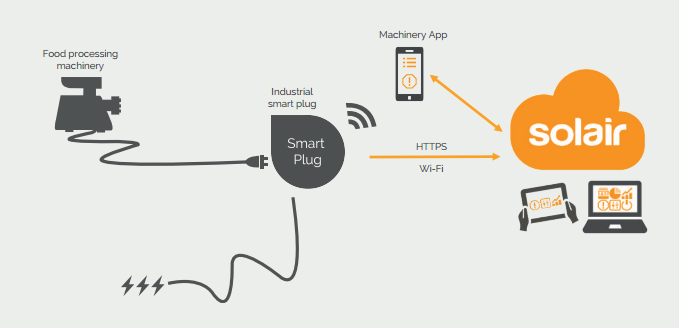
Microsoft today announced that it has acquired Solair, an Italy-based IoT service that was founded in 2011 (and not the U.S.-based company that makes retractable awnings).
Solair already used Microsoft’s Azure cloud computing platform to
offer its services, so it’s no surprise that Microsoft plans to
integrate its technology into the Azure IoT Suite.
For now, though, it’s unclear what exactly Microsoft’s plans for Solair
are beyond the company saying that it is “excited about their
technology and talent – and delighted to welcome them to the Microsoft
team.”
The financial details of the transaction were not disclosed.
While Solair is not exactly a household name, the company has already worked with a wide variety of clients, including Italian espresso machine manufacturer Rancilio Group and food processing machine company Minerva Omega Group.
“Solair shares our ambition for helping customers harness their
untapped data and create new intelligence with IoT, and this acquisition
supports our strategy to deliver the most complete IoT offering for
enterprises,” said Sam George, Microsoft’s Partner Director for Azure
IoT, in today’s announcement.
Solair offers a full suite of IoT products, including a gateway for collecting data and an enterprise platform for custom deployments and integration with existing services.
The next version of SQL Server, Microsoft’s flagship database product, will launch on June 1, the company announced today.
The release follows Microsoft’s usual round of public previews and
release candidates since the company first announced this update in
2015. Maybe the biggest difference between this release cycle and others
is that the company first tested many of the new features of SQL Server
2016 in its Azure cloud.
As we reported earlier this year,
the focus of this update is on speed and security (with the ability to
perform some queries on encrypted data without having to decrypt it
first), but with this new version, Microsoft is also positioning SQL
Server as a solution for data warehousing and big data analytics, thanks
to both its built-in R support and its ability to store and query
both structured and unstructured data.
Clearly, though, Microsoft is most excited about the speed-ups the
update promises — even without making any hardware changes. The
company promises that most queries should now run an average of 25
percent faster than before (on the same hardware). Microsoft also today
announced a new Lenovo benchmark that shows SQL Server 2016 running on
Windows Server 2016 (which is still in preview) handling a standard
database test using 30 terabyte of data faster than any of its
competitors.
As DocuSign VP of platform engineering Eric Fleischman told me, his
company currently uses SQL Server 2016 for storing the metadata of the
tens of thousands of transactions per second its users create on the
service, among other parts of its system. DocuSign has been testing SQL
Server 2016 and Fleischman called the performance gains it has been able
to achieve “off the charts.” These performance gains, as well as the
addition of availability groups, are what DocuSign is most excited about
in making the switch to the 2016 edition.
Asked why DocuSign didn’t opt for one of the many open-source
competitor to SQL Server, Fleischman told me that he looks at choosing
SQL Server as essentially a hiring decision. “When you pick SQL [Server]
or anything else, you are making a hiring decision,” he said. “Are they
going to help me? We don’t want to go write a database. We want to work
with a team that builds databases. That’s why we are staying on this
train. The team is receptive and helps us.”
With SQL Server 2016, Microsoft is also now giving its customers to
stretch their database to Azure in case they need a bit more power than
their on-premise servers can offer.
As Microsoft also today announced, SQL Server 2016 will come in four editions: Enterprise, Standard, Express and Developer.
The Developer edition, it’s worth noting, will be available for free
and will offer all the features of the full enterprise edition — though
its license forbids using it for production use cases. The other free
edition is the Express edition, which can be used in production, but it
can only use up to 1GB of RAM and the maximum database size is 10 GB. It
also doesn’t offer some of the more high-end features of the Standard
and Enterprise editions, including some of the advanced
high-availability, security, business intelligence and data warehousing
features.
As Microsoft senior director of Data Platform marketing Tiffany
Wissner told me, the pricing for the enterprise and standard editions
won’t change from what Microsoft currently charges for the 2014 version (with
the exception of the developer version now being available for free).
She also noted that the team will likely continue the same pattern of
first releasing new features on Azure and then bringing it to the boxed
versions of SQL Server after this release in July. She did say, though,
that the team is looking at what all of this means for the overall
release cadence of SQL Server.
Microsoft updates its Bing app for iOS
with some very useful functionality: image search using a new photo you
take in the app or a photo you hang hanging around on your device.
This feature is not yet available on Android or Windows Phone. It
isn’t even available from the Google app for iOS or Android, or from
Yahoo’s mobile apps, for that matter.
Once you’ve made a photo or selected a photo from your gallery in
Bing on iOS, you can crop the image in order to only get search results
that are similar to a specific part of the photo. From there, you can
share the image through another app or give feedback. Or you can select
any photo in the search results and crop it in order to receive new
search results. (Hat tip to MSPoweruser for reporting on the app update.)
Initial tests suggest that the image recognition technology at the
heart of the new feature doesn’t work perfectly — for example, I took a
photo of a Mitsubushi logo on a nearby television and got other logos on
devices in search results — but it does work well enough for many
visual search queries, and more importantly, it’s forward-looking.
“In five years, we think 50 percent of queries will be on speech or images,” said Andrew Ng, the head of Baidu Research, in a talk he gave in 2014. (Baidu’s iOS app does offer visual search, but the app is not currently available in English.)
What Google has done in this area is the Google Goggles app, which is still available for Android
but hasn’t been updated since May 2014. And it only took a quick guess
at identifying an object or a place in an image, rather than offering up
full-fledged image search.
Pinterest last year implemented visual search that allow users to crop specific parts of images and then find similar pins.
In what may come as no surprise, Microsoft won't let you use Cortana
to perform a Google search anymore. While the digital assistant was
capable of using a third-party search engine on Windows 10, the company
announced this week that the "result is a compromised experience that is
less reliable and predictable." So, to ensure that everything works
well, Microsoft will only allow Cortana to launch the new Edge browser and find answers via Bing.
"Unfortunately, as Windows 10 has grown
in adoption and usage, we have seen some software programs circumvent
the design of Windows 10 and redirect you to search providers that were
not designed to work with Cortana," GM of search and Cortana Ryan Gavin
explained in a blog post.
"The continuity of these types of task completion scenarios is
disrupted if Cortana can't depend on Bing as the search provider and
Microsoft Edge as the browser." In other words, using other apps led to a
less reliable experience.
This doesn't mean you can't continue to use Google search and Chrome
as your primary browser on your Windows 10 machine. You can certainly
still do that, and set those and other third-party apps as the default
option to hop around the internet. However, you'll want to keep in mind
that Cortana will only provide answers to questions and lend a hand with
tasks through Microsoft Edge and Bing.
Google and Microsoft say they have recently reached an agreement
under which they will drop pending regulatory complaints against one
another across the globe. The pair have also agreed that they will try
to work among themselves to settle any future issues before running to
regulators.
“Microsoft has agreed to withdraw its regulatory complaints against
Google, reflecting our changing legal priorities,” a Microsoft
representative said in a statement to Re/code. “We will continue to focus on competing vigorously for business and for customers.”
Google, meanwhile, offered up a similar statement, affirming that it
too will withdraw any regulatory complaints it has made. “Our companies
compete vigorously, but we want to do so on the merits of our products,
not in legal proceedings.”
Neither company made any product commitments to one another as part of this deal.
The timing is interesting, coming just as European regulators charge that Google is abusing its position in the Android market. However, both sides say the deal was in the works for some time.
Microsoft says it isn’t taking a position on either the European
Union case against Android or an earlier EU inquiry with regard to
search. It has, though, dropped its memberships in FairSearch and ICOMP, two groups supporting antitrust actions over Google’s search business.
What has changed most between the two companies is the leadership,
with current CEOs Sundar Pichai and Satya Nadella enjoying a far more
cordial relationship than Steve Ballmer and Eric Schmidt, who tussled
over all manner of issues from search practices to browsers to the hiring of Kai-Fu Lee.
Under Nadella, Microsoft has also moved to embrace Android and
Apple’s iOS amid its declining fortunes in the smartphone business. The
company has brought a number of products to those operating systems,
including Office and Skype.
Microsoft has ended production of the Xbox 360, the company announced today. The system was introduced in November 2005 and has sold more than 84 million units. Online services for the console will remain available.
"While we've had an amazing run, the realities of manufacturing a product over a decade old are starting to creep up on us," Xbox boss Phil Spencer said in a statement. "Which is why we have made the decision to stop manufacturing new Xbox 360 consoles. We will continue to sell existing inventory of Xbox 360 consoles, with availability varying by country."
Xbox 360 game servers are staying online, Microsoft said. Additionally, services like Games With Gold and Deals With Gold will continue on Xbox 360, while the hardware will still be covered by Xbox Support. Additionally, the Xbox 360 backward compatibility marketplace on Xbox One will remain online.
"The Xbox 360 helped redefine an entire generation of gaming at Microsoft," Spencer said. "I am incredibly proud of all of the work and dedication that went into development of the Xbox 360 hardware, services and games portfolio over the last decade. And I'm grateful to the fans for their continued passion and support."
The Xbox 360 celebrated its 10th anniversary in November 2015.
Spencer also shared some big numbers that Xbox 360 players have achieved in the past decade.
Microsoft Translator's image translation is
simple: point your phone's camera at a sign or menu in any of the 21
supported languages and the app translates it in real-time onscreen. The
app's iOS version got it back in February and now the feature comes to the Android one. But a few other features and language additions come along with the update.
Like the iOS version, it also works on
saved images, but it should be noted that Windows Phones have had image
translation since 2010. This is powered by Microsoft's proprietary Deep
Learning engine it uses for Bing's and Skype's translation options,
something more advanced than Google Translate's statistical models and crowdsourcing. That said, Google Translate's Android app has had image translation since at least August 2012. So this is nothing really groundbreaking.
The Android app also gets Inline Translation, which lets users hover
over text phrases to quickly convert them into any of the 50+ languages
in the app's online library. Finally, the Android update includes 34
additional languages that can be downloaded for offline translation,
bringing the total to 43.
A couple of months ago, Microsoft launched the Hub keyboard for Android devices.
At that time it was unclear if the app would ever find its way onto iOS
especially given that there are some apps for Android that have
remained exclusive. However for iOS users who are curious about the
keyboard app, you’re in luck.
Microsoft has recently released the Hub keyboard app
for iOS devices and for the most part it operates the same way as its
Android counterpart. So what so special about the Hub keyboard? For the
regular iOS user, it might not mean much, but if you’re someone who
relies on Office 365 heavily, then you might appreciate the app more.
Basically
the keyboard integrates with Office 365 and will allow users to quickly
search for their own contacts and documents within Office 365 to share
them whenever the keyboard is present. It also makes copying and pasting
a cinch as the most recent clipboard text is shown at the top of the
keyboard, so pasting is just a tap away.
So far reviews of the
keyboard have been somewhat mixed but your mileage might vary depending
on what you use it for. Like we said, it seems to be more catered
towards Office 365 users so if you are one of those users, you might get
more use out of it. The app is a free download so hit up the iTunes App Store for the download.
Over 270 million users have either upgraded to Windows 10 or bought a
new Windows 10 PC since the operating system shipped in July of last
year, a number that Microsoft says outpaces Windows 7 adoption by 145
percent. Microsoft CEO Satya Nadella says that the operating system is
the "fastest growing version of Windows for both consumers and
enterprises," and Windows and Devices group VP Terry Myerson says it has
been used for more than 75 billion hours.
Windows 10's adoption rate has been brisk since it was released
thanks to positive buzz and the return of the Start menu: there were 14 million upgrades in the first day, 75 million in the first month, 110 million installs by early October, and 200 million by early January.
Developers looking to build Universal Windows Platform (UWP) apps for
the Windows Store should be heartened by these numbers—the install base
is already quite large, and it's continuing to grow.
Of course, Windows 10 adoption has also been helped along greatly by
the fact that the operating system is available as a free download to
all Windows 7 and Windows 8 users (in a handful of cases, it has been installed on systems whether users wanted it or not).
The free upgrade is scheduled to end in July barring some extension
from Microsoft, so we may see this relatively brisk adoption rate drop
off after that.
Microsoft built a Linux subsystem for Windows for Project Astoria, its system for running Android apps on Windows 10 Mobile.
But in February the company confirmed that Astoria was dead,
as it rather undermined the Universal Windows Platform concept. At the
time, we speculated that portions of Astoria might live on, as portions
of it had mysteriously started showing up in Windows Insider Previews.
And today, that has come to pass, with Microsoft saying that the Windows 10 Anniversary Update
will include the ability to run the popular bash shell from Unix, along
with the rest of a typical Unix command-line environment.
We're still trying to get the inside story on what Microsoft has done
here, but what we've known for several months now is that the company
has developed some Windows kernel components (lxcore.sys, lxss.sys,
presumably standing for "Linux core" and "Linux subsystem,"
respectively) that support the major Linux kernel APIs. These components
are not GPLed and do not appear to contain Linux code themselves;
instead, they implement the Linux kernel API using the native Windows NT
API that the Windows kernel provides. Microsoft is calling this the
"Windows Subsystem for Linux" (WSL).
A kernel API is one thing, but to be useful you need user mode
applications. For Astoria, this would have been a version of the Android
Open Source Project, Google's mostly BSD-licensed code that provides a
Java-like runtime and various applications and system services. For WSL,
however, Microsoft is turning to Canonical, creators of Ubuntu, for
help. Canonical has provided a system image containing the Ubuntu
versions of the various command-line tools that are typically found in a
Linux distribution.
Our understanding is that these are not recompiled or ported versions
of the programs (as are used in tools aiming to provide a Unix-like
environment on Windows such as Cygwin) but instead unmodified programs.
Microsoft is describing this in terms of providing a Linux-like
command-line environment at the moment, but from what we can gather,
there's little fundamental restriction to this, potentially opening the
door to running a wide range of Linux programs natively on Windows.
This is far from the first time that Windows has been able to
masquerade as a Unix-like operating system. From its inception, Windows
NT included something called the POSIX subsystem, offering an
environment minimally supporting the standardized version of the Unix
APIs. A third-party offering called Interix greatly extended this with a
wide range of common Unix command-line tools. Microsoft bought Interix,
rebranding it first as Services For Unix (SFU) and then Subsystem for
Unix Applications (SUA). In one way or another, this Unix-like mode was
supported up until Windows 8; Windows 8.1 removed it.
Whatever their names, these various subsystems suffered primarily
from appearing to software as yet another Unix variant. They contained
subtle differences from the POSIX support found in both FreeBSD and
Linux, and they didn't provide the various non-standard extensions found
in those kernels. This meant that porting applications to compile and
run correctly was challenging.